THE GAP
Wanting is not doing
A meta-analysis of 47 experiments found that a medium-to-large boost in intention led to only a small-to-medium change in what people actually did.
See the numbers doodleaction
00WHAT THE RESEARCH SAYS

Wanting to do something is only the start.
Psychologists call it the intention-behaviour gap. One of the best-studied ways across it is surprisingly simple: decide in advance when, where and how you will act, and write it as an if-then plan.
Check your plan01Principles
02THE SHORT ANSWER
Intentions alone move behaviour less than we hope.
Specific plans and repeated cues close more of the gap.
THE GAP
A meta-analysis of 47 experiments found that a medium-to-large boost in intention led to only a small-to-medium change in what people actually did.
See the numbersIF-THEN PLANS
Plans of the form "If situation Y happens, then I will do X" had a medium-to-large effect on reaching goals across 94 independent tests.
Check a planHABITS
Repeating one action after the same daily cue made it feel more automatic over time. In one UCL study the average was 66 days, with a wide range.
How to start03A QUICK PLAN CHECK
Pick the kind of plan you have in mind. The bar shows how strongly the research summarised here links that kind of plan to actually following through.
Based on published meta-analyses and studies of intentions, implementation intentions and habit formation. A general guide, not a promise of results.
04TWO NUMBERS WORTH KNOWING
One figure on how much if-then plans help,
one on how long a new habit can take.
d = 0.65
Effect on reaching goals, 94 tests
Gollwitzer and Sheeran pooled 94 independent tests in 2006 and found implementation intentions had a positive effect of medium-to-large size on goal attainment.
IF-THEN PLANS · META-ANALYSIS
18–254 days
Days for a daily action to feel automatic
In Lally and colleagues' 2010 study the average was 66 days, but individual times ranged from 18 to 254. The old 21-day rule did not hold.
HABITS · UCL STUDY
For comparison, Webb and Sheeran's 2006 meta-analysis of 47 experiments found that a medium-to-large change in intention (d = 0.66) produced only a small-to-medium change in behaviour (d = 0.36).
05FOUR STEPS TO TRY
None of this needs an app. It is about deciding a few details in advance so the moment itself does the reminding.
Choose something to start doing rather than something to stop. Researchers note you cannot form a habit of not doing something.
"If it is 7am on Monday and I am at the door, then I put on my trainers." Be specific about the moment and the place.
Add a second if-then for the likeliest obstacle, such as rain, a late meeting or a tired evening.
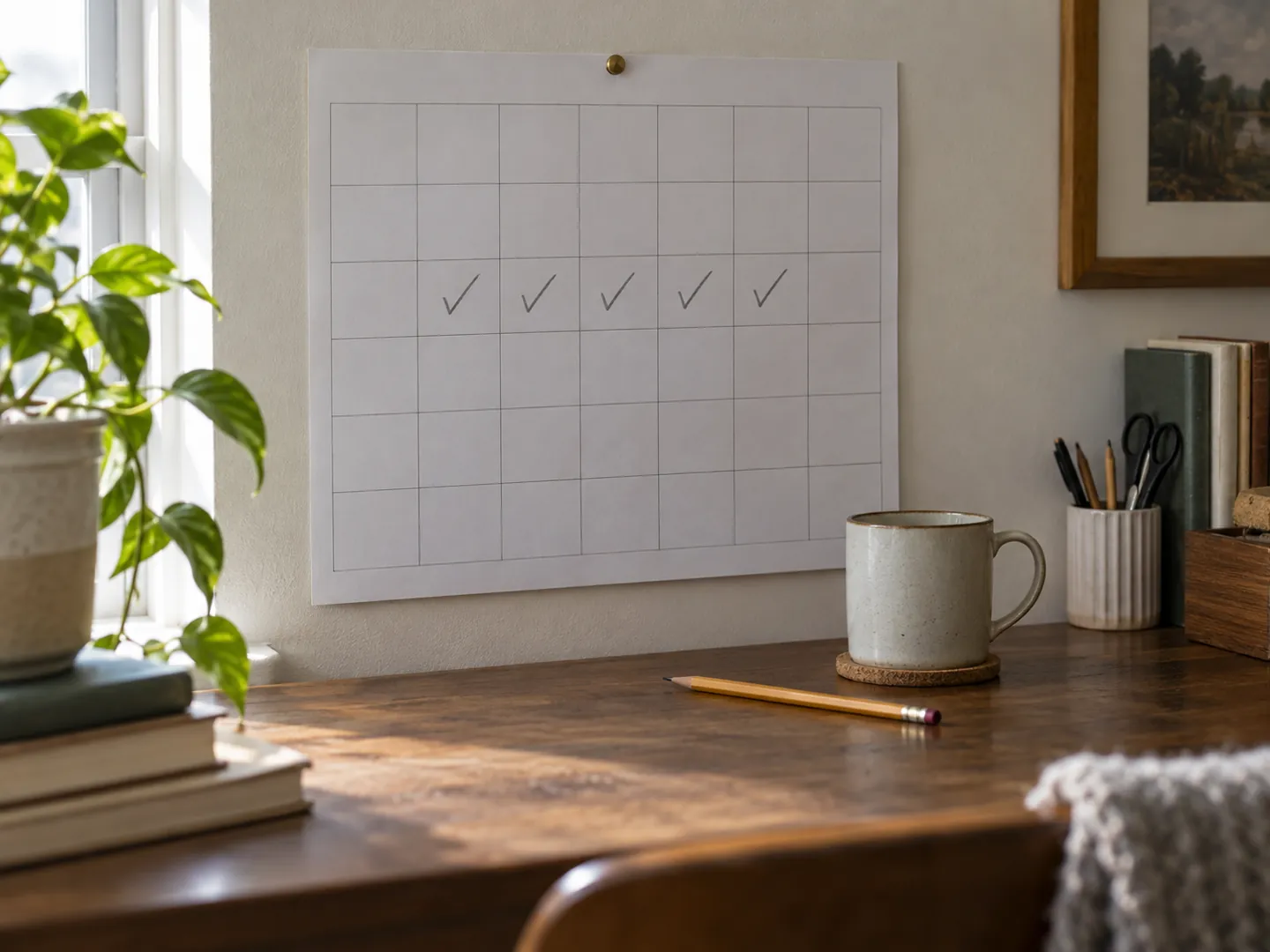
Do it after something you already do daily, like making coffee. A simple tick sheet can help while it beds in.
06WHY IT WORKS

Gollwitzer and Sheeran found two processes behind if-then plans: the chosen situation becomes easier to notice, and the planned response starts to run more automatically when it appears.
The UK Behavioural Insights Team makes a similar point in its EAST framework: behaviour is more likely when it is Easy, Attractive, Social and Timely. A plan tied to the right moment covers the timely part.
07Questions
It is a plan that spells out the when, where and how of acting on a goal, usually in the form "If situation Y happens, then I will do X". The term comes from psychologist Peter Gollwitzer.
Often not. A 2006 meta-analysis of 47 experiments found that a medium-to-large increase in intention led to only a small-to-medium change in behaviour.
The research does not support that figure. In a 2010 UCL study the average was 66 days, with a range of 18 to 254 days, and the lead author says the time is highly variable.
In the UCL habit study, missing the occasional opportunity did not seriously impair habit formation. The advice is simply to pick up again at the next cue.
Yes. The 2006 meta-analysis found if-then plans helped shield goals from unwanted influences and helped people step away from courses of action that were failing.
08Sources
ABOUT THIS NAME
doodleaction.com is part of the DoodleSale portfolio. It isn't in an auction right now, but you can ask about leasing it.